The Past Life That Said: Don’t Waste Your Life.
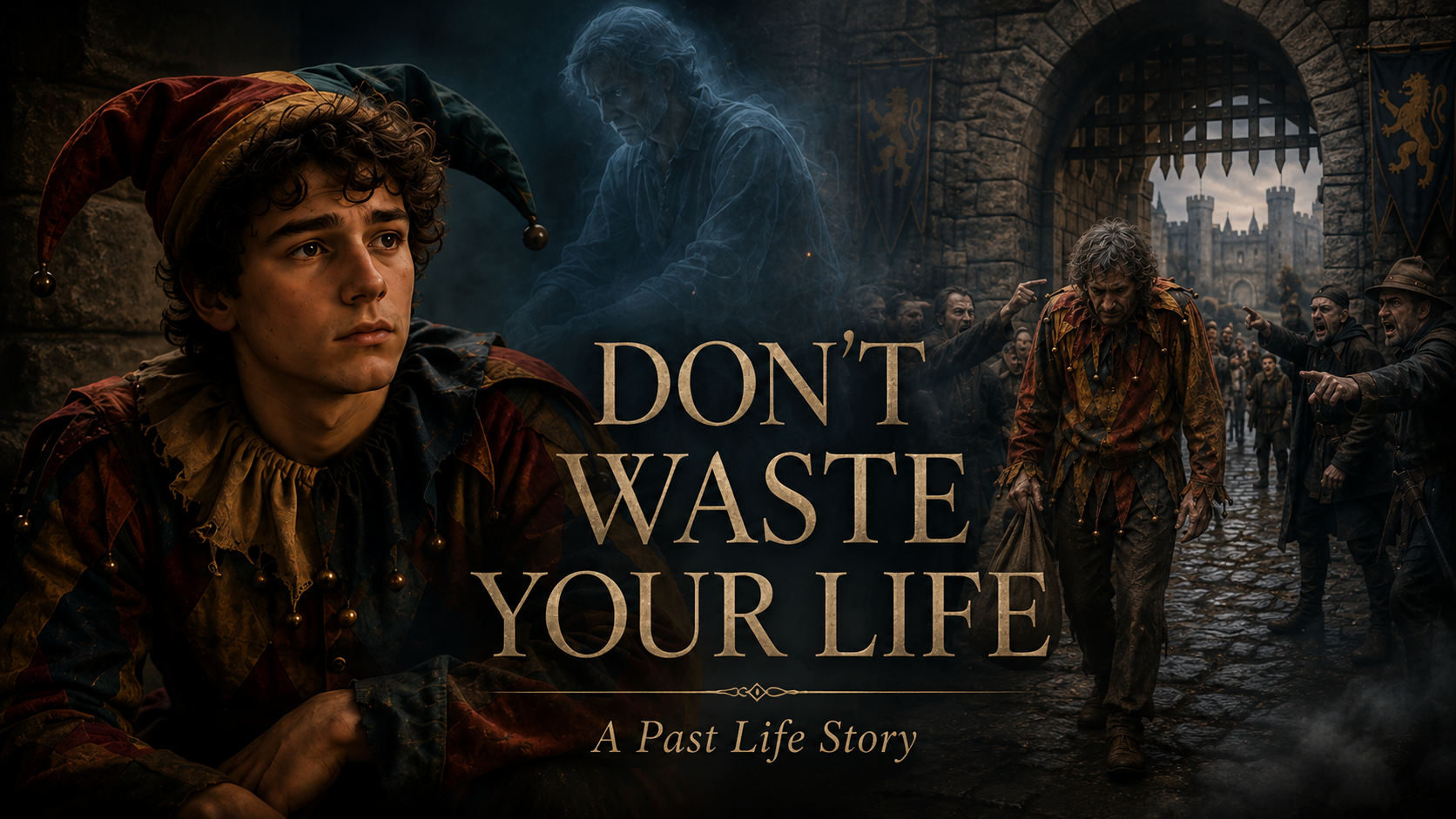
One of the more interesting Past Life Regression sessions I’ve done started with something pretty simple: a feeling of heaviness.
The client wasn’t describing a memory or seeing some elaborate historical scene. He just felt heavy. When I asked him to imagine what that heaviness would look like if it had a physical form, he described a black bowling ball that weighed about sixteen pounds.
That gave us something to work with.
We started exploring what was underneath that heaviness. First came anger. Under the anger was tiredness. Under that was a sense of being mentally cloudy. And underneath all of it was sadness.
This is something I see fairly often in sessions. The first emotion someone identifies usually isn’t the whole story. Anger might be sitting on top of sadness. Anxiety might be sitting on top of fear. Sometimes the mind gives us one emotion because it’s easier to deal with than what’s underneath it.
In this case, we followed the sadness.
That’s when the past-life experience started.
A Boy Named Philip

The client found himself as a fifteen-year-old boy named Philip. He was inside a stone room with a torch on the wall. As we explored the scene, it became clear that he was living in a castle somewhere in Europe, sometime before electricity.
Philip wasn’t part of the royal family.
He was a jester.
As the session continued, he got the sense that he had been selected for that role when he was very young, around five years old. He didn’t seem to have a family around him. The castle and that role were basically his whole life.
At one point I asked him how Philip felt about himself.
The answer was that he felt beneath everyone else.
That was the part that stood out to me.
Here was someone who had a role. He had a place in the castle. He had a function. But that role had also become his identity.
I think we do versions of that in our current lives too.
Someone becomes the provider. Someone becomes the successful one. Someone becomes the funny one. Someone becomes the one who keeps everything together. The role can be useful, but after enough time you can start confusing the role with who you actually are.
That seemed to be happening with Philip.
Then He Lost the Role

Later in the life, Philip was thrown out of the castle.
The client got the impression that the king’s son simply didn’t like him.
I asked how Philip felt standing outside after basically losing the only life he had known.
He said, “Lost.”
We moved forward in the life.
Philip was older now and begging.
He didn’t have a home. He didn’t have a real occupation. He didn’t seem to know what to do with himself outside of the identity he had grown up with.
When I asked how he felt at that point, the answer was, “Hopeless.”
We moved farther ahead again.
Nothing really changed.
Eventually, we got to the last day of Philip’s life. He was around sixty years old and lying on the ground.
I asked the client what Philip’s last thought was.
The answer was:
“What a waste.”
That was probably the most important part of the entire session.
Not because Philip had lived some dramatic or famous life. Actually, the opposite.
It was a pretty sad and ordinary life. He was given an identity early, lost it, never recovered from it and spent the rest of his life disconnected from any real sense of purpose.
What Happened Next

After Philip died in the experience, the client still sensed him as being stuck in that same emotional state.
Lost, sad and heavy.
So instead of just observing what happened, I asked the client to interact with him.
He told Philip that things were going to be okay. We worked on releasing some of the emotional weight Philip had been carrying.
Then I flipped the process around.
I asked Philip to help the client release the heaviness that had brought us into the experience in the first place.
The client immediately went back to that same image from the beginning of the session: the sixteen-pound black bowling ball.
Philip took it and threw it away.
The client said he felt more relaxed afterward.
Before we finished with Philip, I asked one more question.
If Philip could give him one piece of advice based on the life he had just lived, what would he say?
The answer was:
“Don’t waste your life.”
Was Philip Actually a Past Life?
I don’t know.
That’s always an important part of how I approach this work.
Maybe Philip was an actual previous lifetime.
Maybe the client’s unconscious mind created a story that represented something he was dealing with emotionally.
Maybe there’s some combination of the two that we don’t completely understand.
I don’t think I need to decide that for the client.
What I’m more interested in is whether the experience is useful.
In this case, the session started with a very real feeling of heaviness in the present. That feeling led to anger, tiredness, sadness and then into a story about someone who spent much of his life feeling trapped in an identity and eventually believing his life had been wasted.
Whatever someone believes about reincarnation, there is something there worth looking at.
We Can Waste a Life Without Realizing It
Most of us are probably not going to end up begging outside a medieval castle.
But it is pretty easy to lose years of your life without noticing it.
You stay angry at someone long after the situation is over.
You stay in a relationship, job or situation you know is finished.
You keep saying you’ll do something once life settles down.
You keep putting off taking care of yourself.
You build your entire identity around work, money, being responsible or being needed.
You spend years waiting to feel ready.
That’s the part of Philip’s message that I think matters.
“Don’t waste your life” doesn’t mean quit your job tomorrow, move across the country or blow up everything you’ve built.
It might mean paying attention to where your life is actually going.
It might mean asking whether the things taking up most of your time are also the things you care most about.
It might mean noticing the emotional weight you’ve been carrying for years and asking whether you still need to carry it.
The Past Life Is Only Useful If It Helps the Present
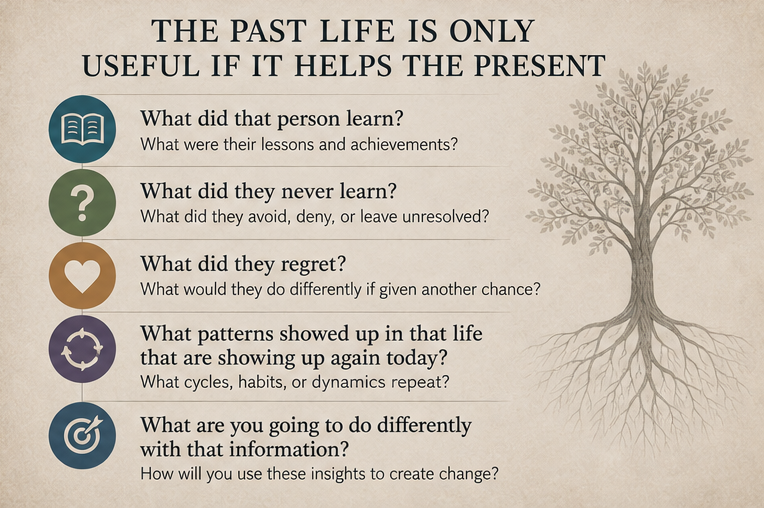
This is probably the biggest thing I’ve learned from doing Past Life Regression.
The story itself is interesting, but I don’t think the goal is simply to find out who you might have been.
I’m much more interested in what the experience shows you about who you are now.
What did that person learn?
What did they never learn?
What did they regret?
What patterns showed up in that life that are showing up again today?
And most importantly, what are you going to do differently with that information?
Otherwise, it just becomes an interesting story.
Philip’s story ended with him looking back at his life and thinking, “What a waste.”
His message to the person experiencing that life was simple:
Don’t do the same thing.
Whether Philip was literally a past life or the mind’s way of telling a story, I think that’s a useful question for any of us.
Are you actually living your life, or are you mostly getting through it?