The Past Lives We Leave Behind
One of the things I find interesting about doing this work is how a second session can sometimes pick up a thread from the first one, even when the story itself seems completely different.
That happened recently with a client I’ll call Steve.
His first session centered around fear, powerlessness and abandonment. Months later, his second session seemed to go underneath that into something deeper: rejection, unworthiness and the belief that maybe he didn’t deserve happiness or success.
The settings were completely different. The people were different. Even the circumstances were different.
But the pattern was almost identical.
In both past-life experiences, Steve found someone who had been left behind.
And in both, he eventually went back for them.
The Boy Who Was Left Behind
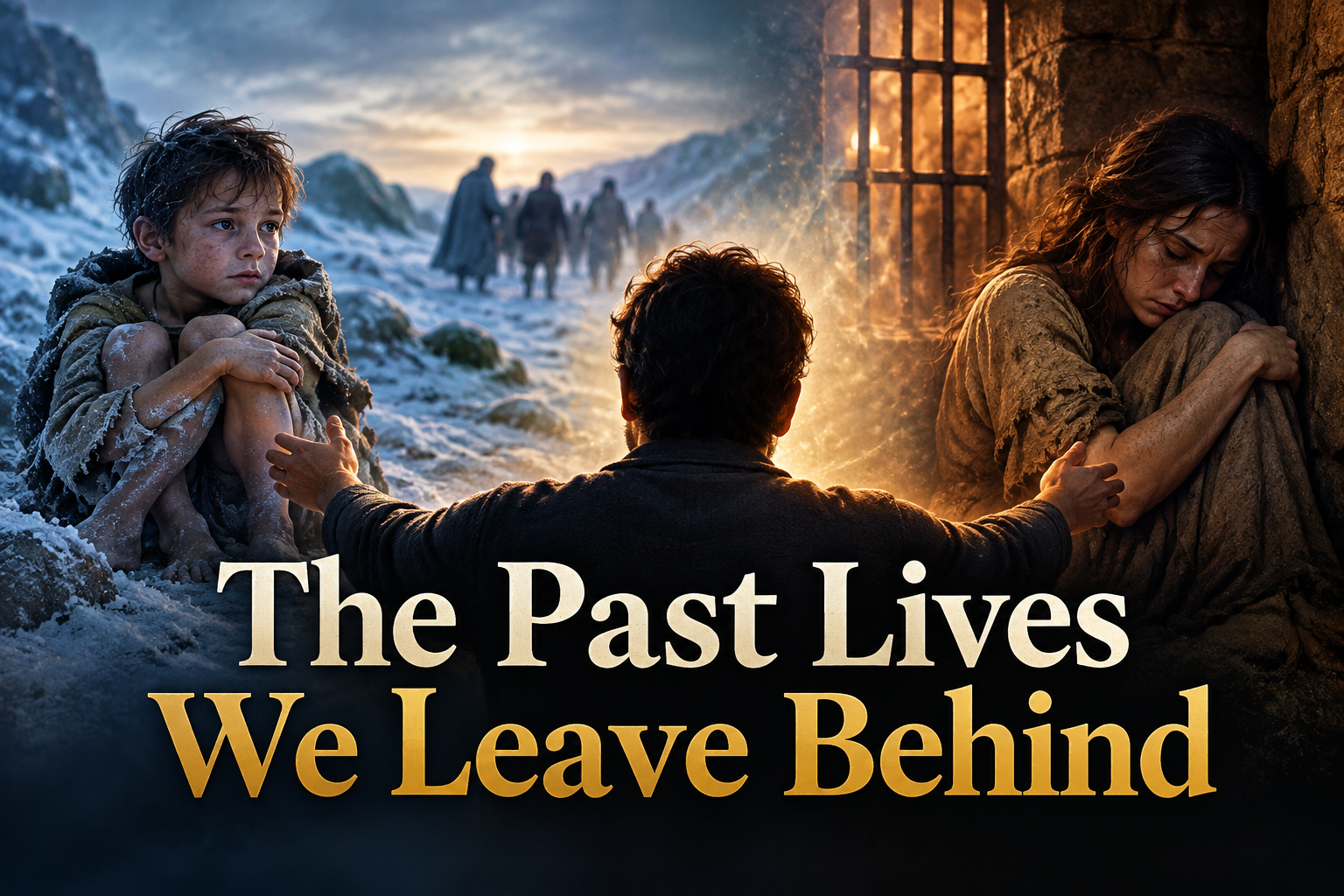
In Steve’s first session, he experienced himself as an eleven-year-old boy living through what appeared to be some kind of catastrophic event thousands of years ago.
The world around him had broken down, and he was traveling through a frozen landscape with a small group of survivors.
The boy was becoming weak and couldn’t keep up. Eventually, the group made the decision to leave him behind.
They took his clothing because they needed it to survive. What struck me was that the boy willingly gave it to them. He understood what was happening. He knew they needed the clothing, and he also seemed to know what it meant for him.
He was probably going to die.
When I asked Steve what that moment felt like, he described it as “total self-abandonment.”
The boy was left alone, naked and freezing. Eventually, he stopped fighting. His final thought was:
“I don’t want to die this way.”
But the experience didn’t end with his death.
Steve sensed that some part of the boy was still there.
It was almost as if he had never completely moved beyond that final emotional moment. He remained isolated in that frozen landscape carrying this feeling of, “What’s the point?”
So we went back for him.
Steve found the boy and eventually brought him into the peaceful inner temple we had created earlier in the session. The boy entered the water and dissolved into light.
Steve described it as a completion.
Something that had been frozen there for a very long time was finally able to move again.
At the time, that felt like a powerful ending to the session.
I didn’t realize we would encounter almost the same pattern months later.
The Woman Who Couldn’t Forgive Herself
When Steve returned for another session, he entered what appeared to be another past life.
This time he experienced himself as a young woman living in medieval France.
She was a healer. Her knowledge seemed to have been passed through generations, from grandmother to mother to daughter.
She worked with people in a way that helped them connect with something deeper within themselves. Steve described watching their eyes almost light up during these experiences.
But the religious authorities around her believed what she was doing was wrong.
Eventually, people within her community were being persecuted and burned at the stake.
She became terrified.
Under that pressure, she confessed and betrayed others, believing that perhaps cooperating would save her.
It didn’t.
She was imprisoned too.
Steve experienced her spending seven years there. Over time she became starving, physically deteriorated and mentally confused.
But by then, the prison wasn’t only around her.
She had created another one inside herself.
She believed she had betrayed her people. She had betrayed her gift. She had betrayed what she believed in.
And somewhere during those years, she decided she no longer deserved freedom.
She didn’t deserve happiness.
She didn’t deserve success.
Eventually, she seemed to reach an even deeper conclusion.
She didn’t deserve another life.
She died carrying that belief.
And just like the boy from Steve’s first session, some part of her seemed to remain connected to that experience.
That was when the similarity between the two sessions really caught my attention.
The boy had been abandoned by others.
The woman had abandoned herself.
Different lives. Different circumstances.
But emotionally, they seemed to be carrying different versions of the same wound.
So Steve went back for her too.
Going Back for Her
Steve found her curled up in what appeared to be an underground place.
She didn’t want him there.
She told him to go away.
“You can’t help me.”
He stayed with her.
Eventually, she broke down and told him:
“I gave away my faith. And I can never get it back.”
Something had happened earlier in the session that suddenly became important.
Steve had encountered a guide named Faith. At one point, Faith handed him a pen and told him it represented “the word.”
At the time, Steve didn’t really understand what that meant.
Now he did.
He took the pen and wrote one word on the woman’s hand:
AGAPE.
Unconditional love.
The woman couldn’t understand it.
After everything she believed she had done, how could anyone love her?
She asked him:
“How can you love me? You saw what I did.”
Steve answered:
“Because that is what I am. I am love. I can do no less.”
For me, that was the central moment of the session.
Not because it proved anything about whether this woman actually lived hundreds of years ago. I don’t know that.
It was what happened when Steve returned to someone who believed she was beyond forgiveness.
He didn’t argue with her.
He didn’t tell her what she had done was okay.
He simply refused to leave her there.
The Pattern Between the Two Lives
When I looked at Steve’s two sessions together afterward, this was the part that stayed with me.
In the first journey, there was an eleven-year-old boy who had been left behind because the people around him believed they had no other choice.
Months later, there was a woman who had essentially left herself behind because she believed she was no longer worthy of moving forward.
Both remained connected to the moment where their lives had emotionally stopped.
And Steve went back for both of them.
I’ve seen versions of this in other sessions too.
Sometimes a past-life experience seems complete. The person dies, leaves the body and moves on.
Other times there seems to be something unfinished.
A person remains connected to a battlefield. A house. A prison. A relationship. A moment of betrayal or loss.
Maybe you see that spiritually and believe some aspect of consciousness can remain connected to an unresolved experience.
Maybe you see it psychologically and believe the unconscious mind creates a character who carries an emotion we haven’t fully processed.
I’m comfortable with either interpretation.
I’m not particularly interested in forcing someone to decide whether what they experienced was literally a past life.
What interests me is what happens when they return to it.
Because sometimes the person they find there doesn’t need another explanation.
They need someone to come back for them.
What Do We Leave Behind?
That question has stuck with me since Steve’s sessions.
If these experiences are past lives, what happens to the parts of us that never fully move beyond the moments that overwhelmed us?
And if they’re symbolic, maybe the question isn’t really that different.
How many versions of ourselves do we leave behind during this life?
The child who felt unwanted.
The teenager who was humiliated.
The person who was betrayed.
The version of ourselves who failed at something and quietly decided, Maybe I’m just not good enough.
We keep moving forward because life keeps moving forward.
But emotionally, perhaps some part of us doesn’t always come along.
That’s what I found so interesting about Steve’s two journeys.
The first session seemed to tell him:
You no longer need to hide.
The second gave him something even simpler:
I am love.
I don’t know exactly what these past-life experiences are.
After doing this work for years, I’m actually more comfortable with that uncertainty than I used to be.
But I do think there’s something important about the idea of going back.
Not to stay there.
Not to endlessly relive the past.
But to find whatever part of ourselves may still be standing in that frozen landscape or sitting alone in that prison.
And this time, not leave them behind.