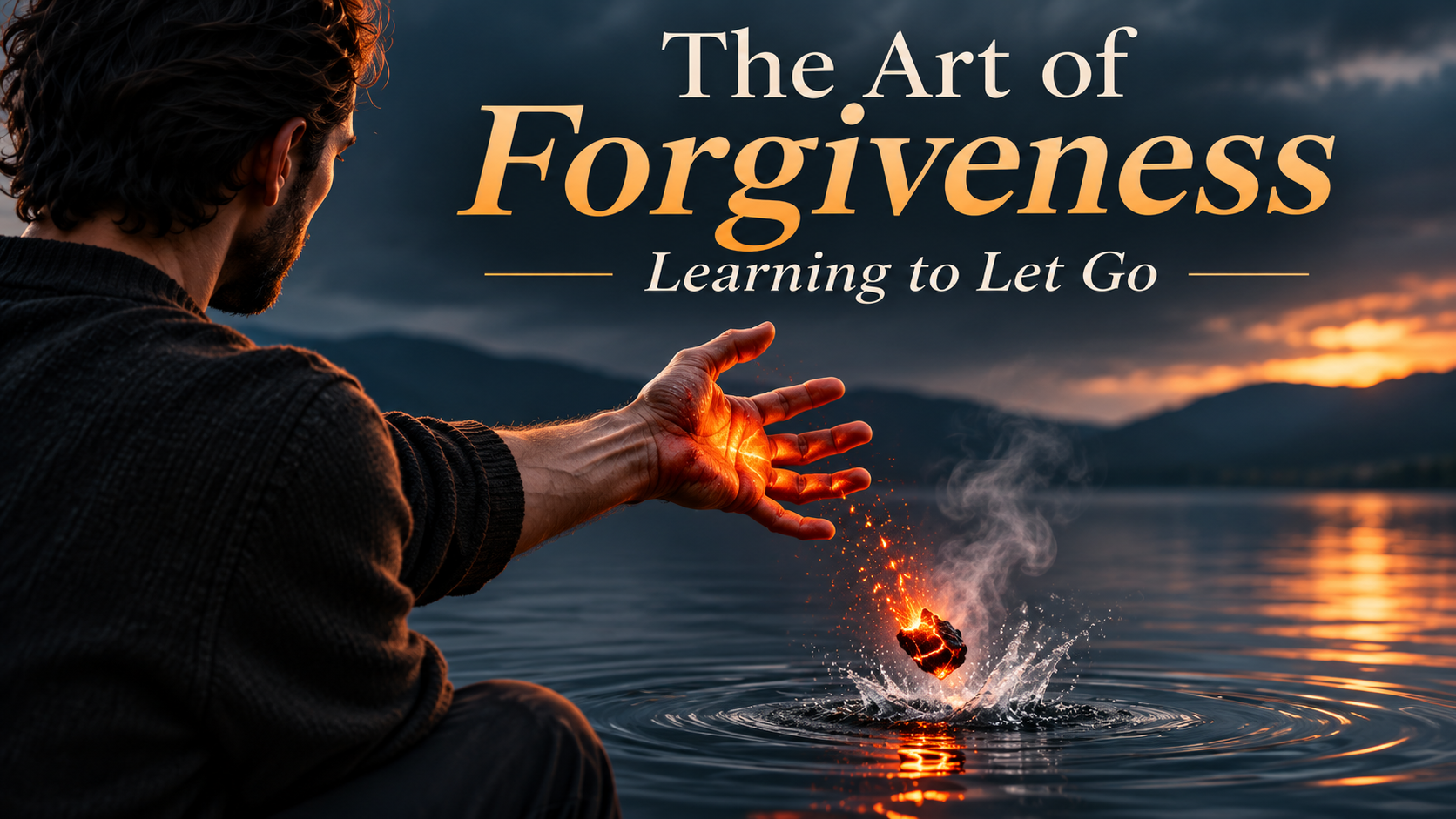
One of the things I've noticed after years of working with people is just how much pain we carry from our past.
Sometimes it's something that happened when we were children. A parent who wasn't there for us. Someone who betrayed our trust. A relationship that ended badly. Words that were spoken years ago but somehow still have the power to hurt us today.
Other times, the pain comes from something we've done ourselves. A decision we regret, someone we hurt, or an opportunity we let slip away. We replay those moments, wondering what we could have done differently.
I see this in the lives people are living today, and I see it in the past-life experiences that emerge during sessions.
Different people, different circumstances, sometimes entirely different lifetimes, but the emotional patterns are often remarkably similar.
Anger. Resentment. Guilt. Betrayal. Abandonment.
It's part of the human condition, and I think much of it runs deeper than we realize.
Some of these patterns are generational. We inherit certain ways of reacting to the world from our parents, who learned them from their parents. Sometimes those patterns are reinforced by the families, communities, and systems we grow up in.
And if you consider the possibility of past lives, there's another interesting question. Could some of these emotional patterns extend beyond a single lifetime?
I don't know. But I do find it interesting that the same struggles seem to emerge whether someone is exploring a childhood memory, an inner landscape, or what they experience as a past life.
Whatever the source, there's something we eventually have to confront.
What do we do with all this pain?
When Anger Becomes Something We Carry
Anger itself isn't necessarily a bad thing.
Sometimes anger is an appropriate response to being mistreated. It can tell us that a boundary has been crossed, that something is unfair, or that we need to protect ourselves.
But there's a difference between experiencing anger and continuing to carry it long after the event has passed.
Someone may have hurt you twenty years ago. They might have moved on, forgotten about it, or perhaps never even realized how deeply their actions affected you.
Yet you're still carrying the experience.
You think about what happened, and suddenly the emotions return. Your body reacts. You feel the frustration, the sadness, maybe even the same helplessness you felt when it originally happened.
In a sense, you're experiencing the past all over again.
This is something Eckhart Tolle has explored extensively. He describes what he calls the pain-body, the accumulated emotional pain that can become activated by our thoughts, memories, and experiences.
He also talks about how the ego can build an identity around these wounds. We become the person who was betrayed, abandoned, rejected, or treated unfairly.
And sometimes, without realizing it, we become attached to that story.
Not because we enjoy suffering, but because the story has become part of how we understand ourselves.
There's an important distinction here. Recognizing that we identify with our pain doesn't mean the original hurt wasn't real. It doesn't mean we weren't victimized or that the other person's behavior was acceptable.
It simply raises another question.
Is the pain still helping us understand what happened, or has it become something we're continuing to inflict upon ourselves?
What Forgiveness Really Means
The Buddhist teacher Thich Nhat Hanh spent much of his life exploring anger, suffering, compassion, and forgiveness.
One of his central teachings was that we cannot overcome anger by simply adding more anger. Instead, he encouraged people to become aware of their suffering, understand its roots, and gradually develop compassion.
He also recognized something I find particularly important. People who cause suffering are often carrying suffering themselves.
That doesn't excuse their behavior.
But understanding that someone acted out of their own fear, pain, ignorance, or conditioning can sometimes change how we relate to what happened.
Maybe you had a parent who was emotionally unavailable. As a child, you experienced that as rejection. Years later, you begin to recognize that your parent was probably dealing with wounds of their own.
You may still wish things had been different. You may never have the relationship you wanted.
But perhaps you no longer need to carry the same resentment.
Ram Dass approached forgiveness from a similar perspective, often encouraging people to look beyond another person's actions and recognize the humanity underneath.
In one of his teachings on forgiveness, he described confronting people toward whom he had built up considerable resentment. He had good reasons for being angry, at least from his perspective. But he eventually recognized how costly it was to continue holding onto those feelings.
What I appreciate about these teachings is that forgiveness isn't necessarily about the other person.
It's about what we're carrying.
And forgiveness doesn't mean forgetting what happened, pretending everything is fine, or allowing someone back into your life.
You can forgive someone and still maintain boundaries.
You can let go of resentment and still recognize that what happened was wrong.
You can even forgive someone without ever speaking to them again.
Sometimes the person we need to forgive is ourselves.
That may be the hardest one.
The Hot Coal
There's an old Buddhist metaphor that I've always liked.
Holding onto anger is like holding a burning coal in your hand. You may be angry with someone else, perhaps even wanting them to experience the pain they've caused you.
But you're the one holding the coal.
You're the one getting burned.
I've taken this metaphor and incorporated it into some of my Soul Journey sessions, particularly when someone is struggling with anger, resentment, or forgiveness.
The exercise is quite simple.
When a client encounters a situation involving someone who has hurt them, and they're having difficulty letting go of the anger, I may ask them to imagine they're holding a hot coal in their hand.
I encourage them to really experience it.
Imagine the weight of the coal. The heat coming from it. The sensation of holding something that's burning your hand.
And then I help them recognize what that coal represents.
The resentment.
The anger.
The pain they've been holding onto.
I might ask them to notice what it's like to continue holding it. What is happening to their hand? What is it costing them to keep carrying something that hurts?
Then I ask a simple question.
Do you want to keep holding onto this coal, or would you like to let it go?
That's it.
I don't tell them to drop it.
I don't tell them they have to forgive the person who hurt them. And I certainly don't tell them that their anger is unjustified.
That's an important part of how I approach this work.
I can't make someone forgive another person, nor would I want to.
The choice has to come from them.
But once they recognize what they're holding, and what continuing to hold it is doing to them, something interesting often happens.
They let it go.
In the sessions where I've used this exercise, I've yet to have someone choose to continue holding the coal once they've really connected with what it represents.
And what happens next is often the most interesting part.
Some people imagine the coal falling to the ground and disintegrating. Others drop it into water, where it cools and the heat disappears. Sometimes they simply open their hand and let it fall.
There's no particular way they're supposed to do it.
It's their experience.
But there's often a noticeable sense of relief afterward.
Something that felt heavy a few moments earlier doesn't seem to carry quite the same weight.
Why a Simple Image Can Be So Powerful
One of the things I appreciate about hypnosis and inner exploration is how naturally people respond to symbols and metaphors.
We don't always need to understand an emotional experience intellectually before something begins to shift.
Think about dreams.
You might dream about being trapped in a house, falling from a great height, or searching for someone you've lost. The experience can feel emotionally significant even though nothing actually happened in the physical world.
Our minds can attach powerful feelings to imagined experiences.
And we can sometimes use that same capacity intentionally.
In the hot-coal exercise, the client isn't physically holding anything. There is no actual coal, no heat, no injury.
But the metaphor makes something abstract feel immediate.
Anger is no longer just a thought or an emotion. It's something they're holding.
Something they can examine.
And, if they choose, something they can release.
From a psychological perspective, imagery can help us approach emotions differently and rehearse new responses. The act of letting go becomes a symbolic experience of making a different choice.
I wouldn't claim that dropping an imaginary coal automatically resolves years of emotional pain. Human beings are more complicated than that.
But I have witnessed how meaningful these moments can be.
And sometimes the experience accomplishes something that years of simply thinking about the problem haven't.
The person stops trying to figure out why they're still angry and instead recognizes that they have some choice in how they relate to that anger.
That can be a powerful realization.
The Pain We Carry From Ourselves
There's another side of forgiveness that I think deserves just as much attention.
Forgiving ourselves.
I've worked with people who have carried guilt for things they did decades earlier. Sometimes they've made mistakes that hurt other people. Sometimes they're punishing themselves for decisions they made when they were young, frightened, or simply didn't know any better.
They look back with the understanding they have today and judge the person they were then.
But that person didn't have today's understanding.
This doesn't remove responsibility. We still have to recognize our mistakes, make amends when possible, and learn from what happened.
But at some point, continuing to punish ourselves may no longer serve any useful purpose.
Thich Nhat Hanh taught that even when we've caused suffering, we can begin to heal through recognizing our mistakes, changing our behavior, and acting differently in the present.
I think there's something important in that.
You cannot go back and change what happened.
But you can change your relationship to it.
And maybe the hot coal in your hand isn't anger toward someone else.
Maybe it's the guilt or shame you've been holding against yourself.
The question is essentially the same.
How long do you need to keep burning yourself?
Letting Go Doesn't Mean It Never Happened
I think one of the biggest misunderstandings about forgiveness is the belief that letting go somehow diminishes what happened to us.
As though releasing our anger means the other person gets away with something.
But those are two very different things.
You can recognize an injustice without allowing it to consume your life.
You can remember something painful without having to relive it emotionally every time it comes to mind.
And you can decide that someone no longer deserves a place in your life without continuing to carry hatred toward them.
This isn't always easy, and it isn't always something that happens in a single moment.
Some experiences require time, grieving, support, and a great deal of patience with ourselves. Sometimes anger is still telling us something important, especially if the harm is ongoing.
I also don't believe we should turn forgiveness into another obligation people feel guilty about.
If someone isn't ready to forgive, they aren't ready.
Perhaps there's something they still need to understand, acknowledge, or work through.
That's okay.
What matters to me is that, eventually, we begin to recognize the difference between honoring our pain and remaining attached to it.
What Are You Still Holding?
If there's someone in your life you're still angry with, or perhaps something you've never forgiven yourself for, you might try a simple exercise.
Find a quiet place where you won't be disturbed. Close your eyes, take a few comfortable breaths, and think about something you've been carrying.
It doesn't have to be the most painful experience of your life. In fact, you might start with something relatively small.
Imagine that anger or resentment as a hot coal resting in your hand.
Notice what it feels like to hold it.
Recognize that whatever happened in the past, you're the one holding it now.
Then imagine what would happen if you opened your hand.
You don't have to force anything. You don't have to forgive someone before you're ready, and you don't even have to drop the coal.
Just notice that you have a choice.
If you decide to release it, allow yourself to imagine what that looks and feels like.
Maybe it falls into water. Maybe it turns to ash. Maybe it simply disappears.
Take a moment and notice whether anything feels different.
Perhaps there's relief. Perhaps sadness. Perhaps nothing changes immediately.
Whatever happens, allow it to be your experience.
I've come to believe that much of our inner work involves recognizing what we've been carrying, sometimes for an extraordinary amount of time.
Some of it belongs to our childhood. Some of it comes from relationships, family patterns, or experiences we barely understand.
And perhaps, if you entertain the possibility of past lives, some of it comes from even further back.
But regardless of where it began, the question remains surprisingly simple.
If something you're holding is burning you, do you still need to keep holding it?