Can breathing change your consciousness?
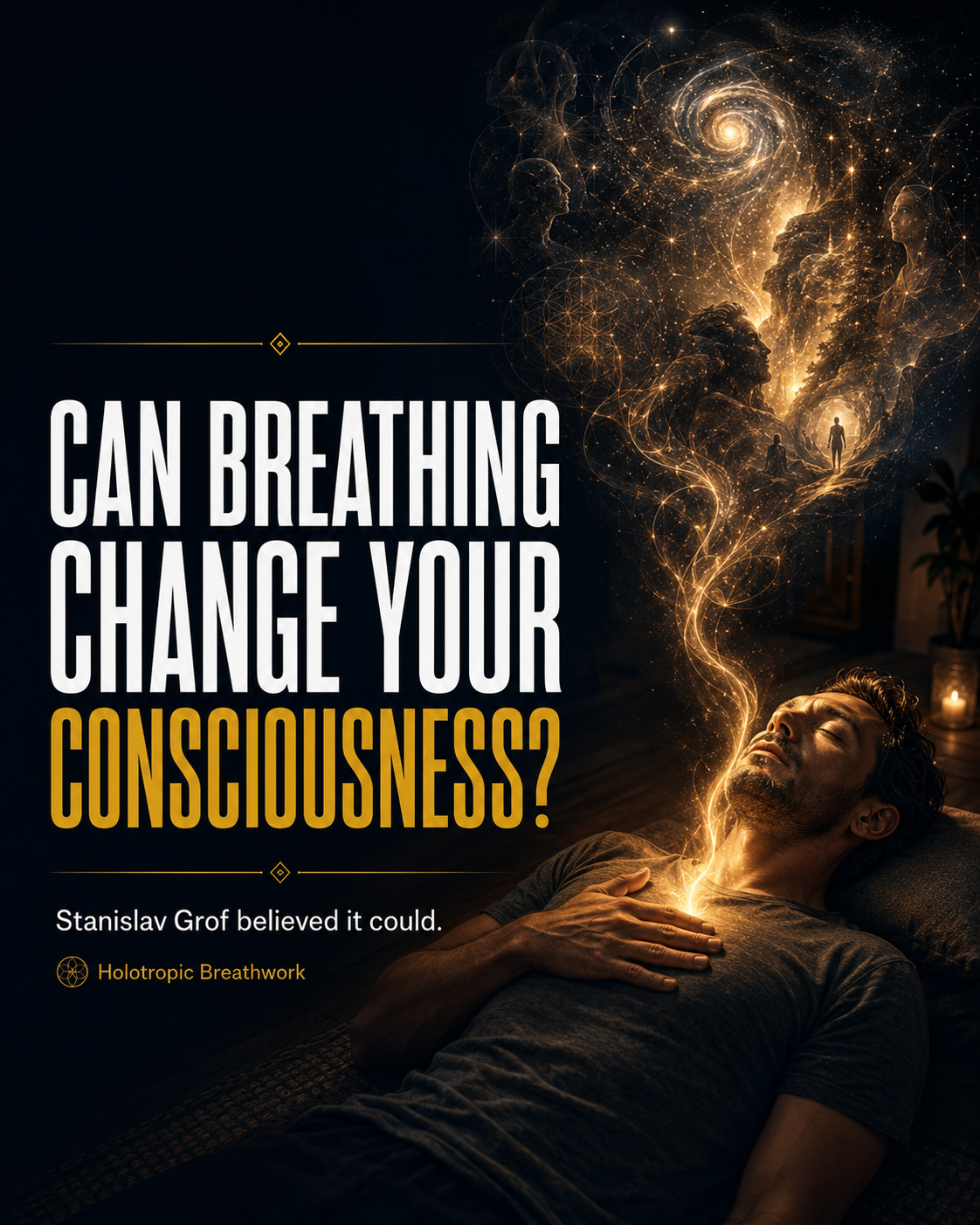
I think it can.
At the start of my sessions, we always begin with the breath. Before we go into the deeper work, I want the person’s body to feel safe. The nervous system has to settle a bit. The mind has to slow down. The breath is usually the first doorway into that.
I don’t use Holotropic Breathwork in my sessions, but I have used it on myself, and I’ve found it very useful.
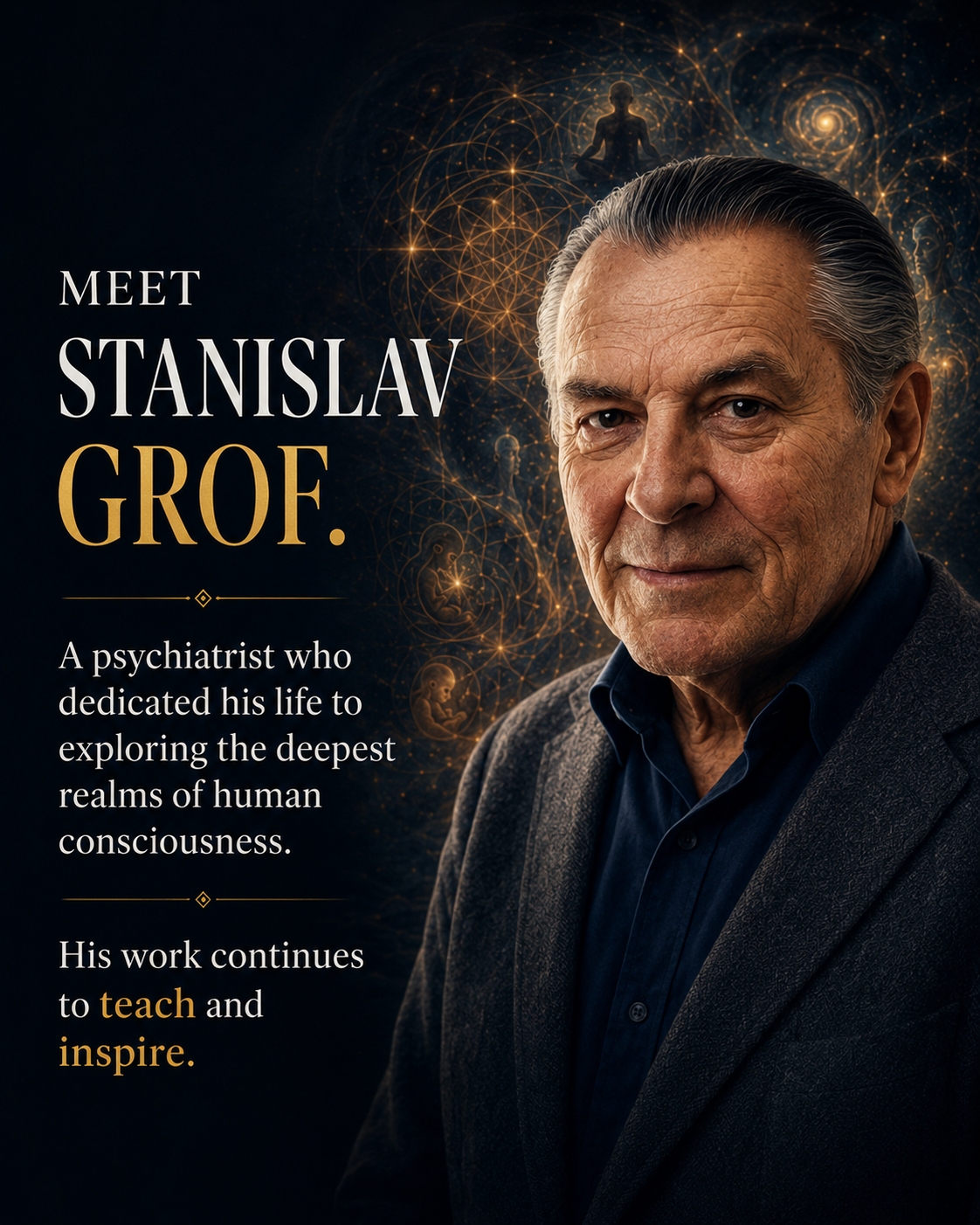
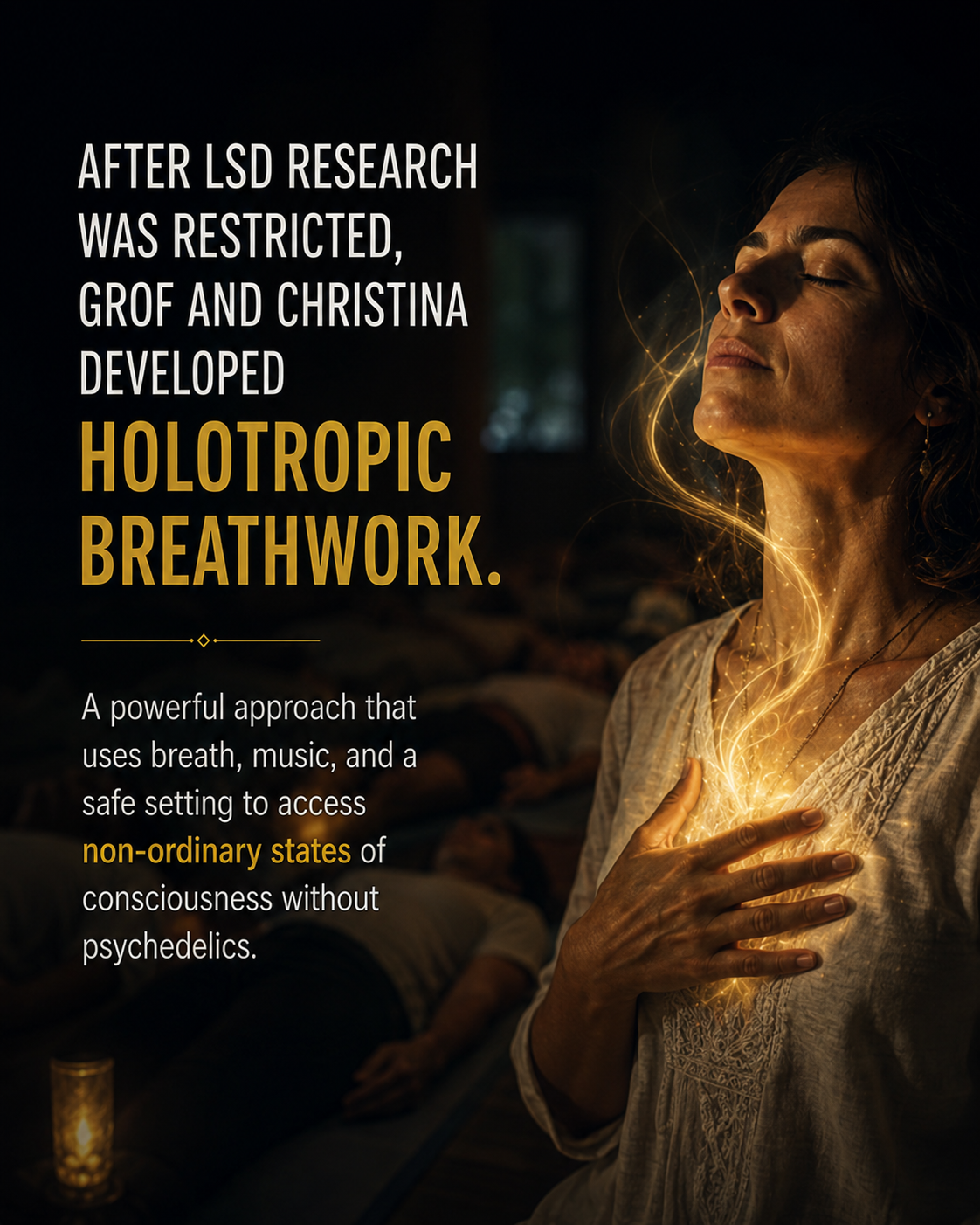
Holotropic Breathwork was developed by Stanislav Grof and Christina Grof after psychedelic research became more restricted. Instead of using substances, the method uses connected breathing, music, a safe setting, and integration afterward to help people enter non-ordinary states of consciousness.
What I find interesting about Grof’s work is that he treated the mind as something much bigger than our everyday thoughts. He believed that altered states could bring up memories, emotions, body sensations, symbolic imagery, birth material, archetypes, and even spiritual experiences.
And honestly, that lines up with a lot of what I’ve seen in my own work.
Breath can open things.
Sometimes it brings up emotion. Sometimes images. Sometimes old tension in the body starts to move. Sometimes you just feel calmer and more present afterward. It doesn’t have to be some huge mystical experience every time, but there is something powerful about using the breath to shift your state.
Grof’s Holotropic Breathwork uses a style of breathing that is faster and deeper than normal, with very little pause between the inhale and exhale. The breath becomes connected, almost circular.
The person usually lies down, closes their eyes, and begins breathing in a steady, intensified rhythm. There is not one exact count, like inhale for 4 and exhale for 6. It is more intuitive than that. The idea is to breathe more fully and continuously, allowing the breath to build energy in the body and shift awareness.
A typical session also uses evocative music. The music is important because it helps carry the person through different emotional and symbolic layers. In official Holotropic Breathwork, the session is usually done in a safe group setting with trained facilitators, and people often work in pairs, where one person breathes and the other sits nearby as support.
As the breathing continues, people may experience body sensations, emotion, imagery, memories, symbolic scenes, or spiritual material. Grof believed this process could open access to deeper layers of the unconscious, including biographical memories, birth-related material, archetypal imagery, and transpersonal experiences.
Afterward, there is usually integration. This may include rest, drawing a mandala, journaling, or sharing what came up. That part matters because the experience can be powerful, and the meaning often unfolds after the breathing is over.
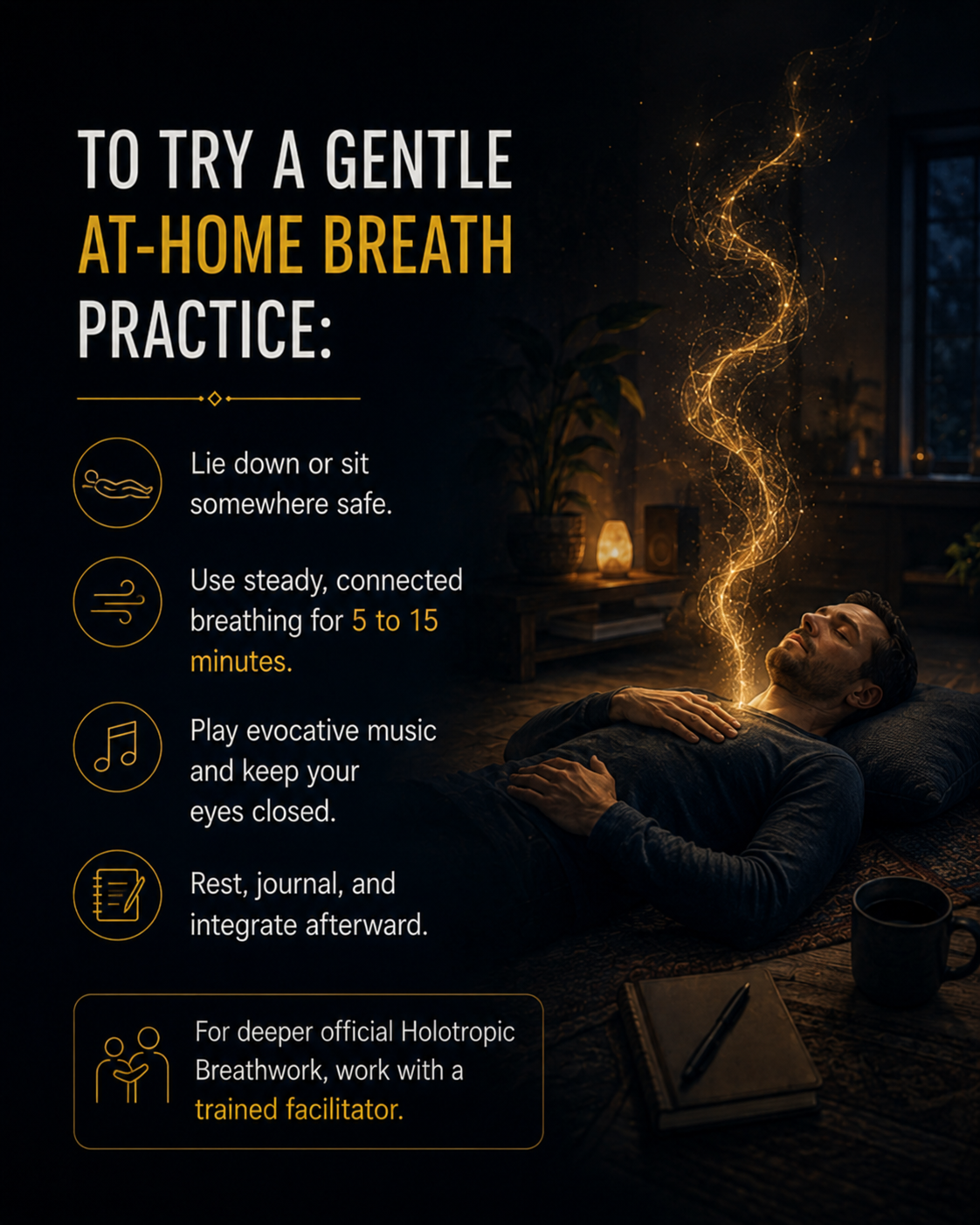
So the basic structure is:
Lie down.
Close the eyes.
Breathe faster and deeper than normal.
Keep the inhale and exhale connected.
Use music to support the journey.
Let the body and mind unfold without forcing it.
Rest and integrate afterward.
I would also add a safety note because this is not just a relaxation exercise. Holotropic Breathwork can bring up intense emotions or strong body sensations, so the deeper official version is best done with a trained facilitator. Grof’s method combines accelerated breathing, evocative music, and bodywork to help release emotional or energetic blocks.
The breath is simple, but it can change the state of the body, quiet the thinking mind, and sometimes open the door to something much deeper.
Have you ever tried Holotropic Breathwork or any deep breathwork practice?
I’d be curious what came up for you.